
Toyohiko Takami arrived in America from Japan with nothing to his name, yet he rose to become a prominent physician in New York City. His life was defined by providing free medical care to impoverished immigrants and establishing the Japanese Mutual Aid Society and the Japanese Cemetery. At the core of his actions lay a profound, selfless love received from an elderly woman he met in a foreign land—Nancy Campbell—and a steadfast belief that “every human being has an equal right to live.” The name “Campbell” engraved on his tombstone silently tells a story of a bond between mother and son that transcended borders and bloodlines.

The Annual Memorial Service at the Japanese Cemetery
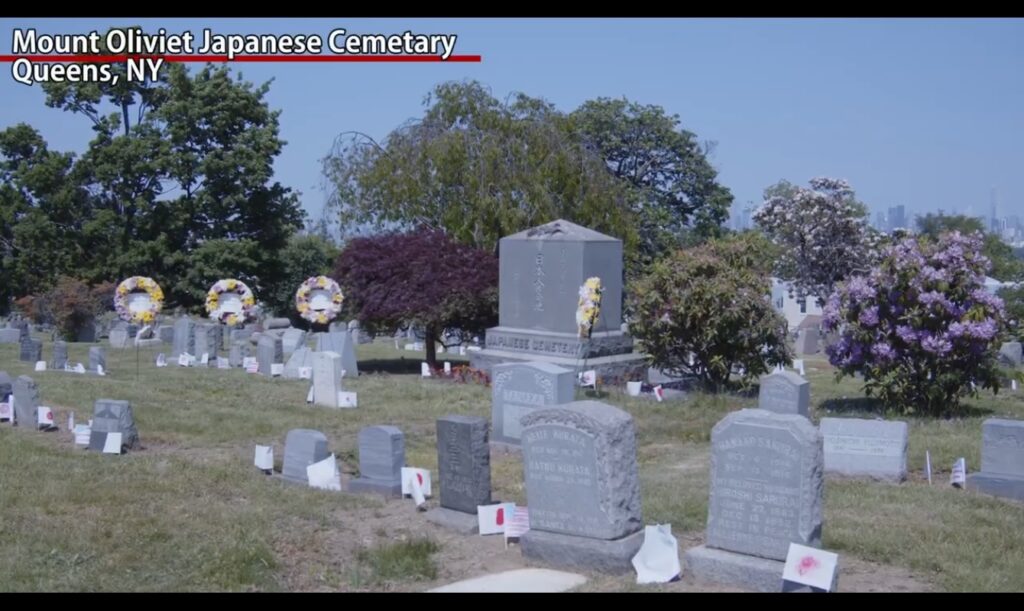
In Queens, New York, there lies a Japanese cemetery. Every year in late May, on Memorial Day, a memorial service is held by the Japanese American Association of New York. Here, about 100 individuals who laid the foundation of the Japanese community more than a century ago are quietly remembered.
In one corner of the cemetery stands a particularly striking, large monument. The name carved upon it reads: Toyohiko Campbell Takami
He was a man who crossed the ocean alone, without any backing, and achieved great fame as a doctor in New York. His medical skills were so renowned that when Admiral Heihachiro Togo—the hero who led Japan to victory in the Russo-Japanese War—was urgently hospitalized during a visit to the U.S., Takami served as his attending physician.

Yet, Takami also dedicated himself to providing free medical care to immigrants struggling in the shadows of rapid economic growth. He treated his patients with deep compassion, laid the groundwork for what is now the Japanese American Association of New York, and contributed immensely to the establishment of the Japanese Cemetery. He held one principle close to his heart: “Everyone is equal, and everyone has the right to live happily.” Where did the source of this conviction lie?

A 15-Year-Old’s Resolve: A 500-Kilometer Journey
Toyohiko Takami was born in 1875 into a samurai family in Kumamoto Prefecture. At age 15, raised under strict education, he encountered a story that would change his life: the tale of Joseph Hardy Neesima (Jo Niijima). Neesima had secretly escaped Japan at the end of the Edo period, traveled to America, studied theology, and returned to found Doshisha University. Young Toyohiko was deeply moved by this way of life.

“I, too, will go to America.”
However, traveling abroad in late 19th-century Japan was no easy feat. He had no funds, no clear objective, and no family support. Yet, Takami refused to abandon his dream. Learning that he could travel by working as a crew member on a foreign vessel, he left home one night without telling his parents.
From Kumamoto to Osaka—knowing his family might be waiting for him at the port to stop him, he gave up on the ship there and chose to travel approximately 500 kilometers on foot. Days of walking 25 kilometers each. Swollen feet. Dwindling funds. One rainy night, he even begged for a place to stay at a police box, only to be turned away.
Still, the kindness of strangers sustained him. While camping in the mountains of Hiroshima, a local hunter invited him in and served him a warm meal. Supported by many such acts of kindness, he eventually met relatives in Okayama, secured a job as a sailor in Kobe, and finally, in October 1891, 16-year-old Takami set foot in New York.
A Fateful Encounter: Nancy Campbell
While late 19th-century New York was growing into one of the world’s greatest metropolises, it was also a city where immigrants from Southern and Eastern Europe lived in extreme poverty. Takami’s goals were to learn English, save money, and enter university.
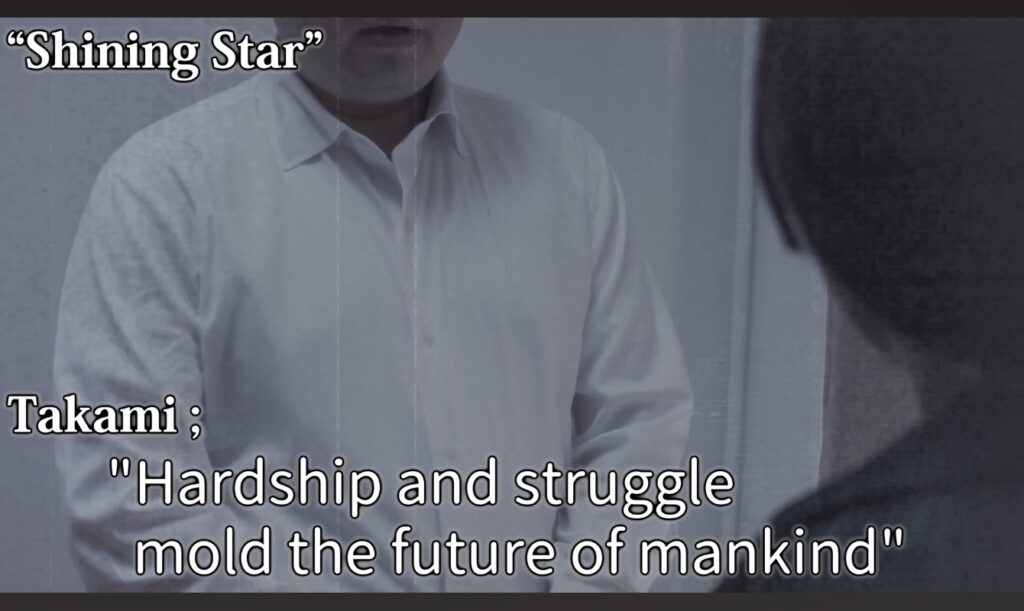
Working as a chef on a naval vessel, he earned such trust that he was eventually promoted to head chef. It was then that the captain introduced him to an elderly woman who offered free English classes for foreigners who couldn’t speak the language. It was a cold day in March 1893. In his autobiography, Shining Star, Takami describes the encounter:
“When I rang the bell, a refined elderly lady opened the door and looked at me with eyes sparkling with intelligence.”

Her name was Nancy Campbell. A descendant of Scottish nobility who had come to America in the 17th century, she was a devout Christian. Campbell understood Takami’s aspirations, taught him English every night, and eventually, they began living together. She loved Takami as if he were her own son.
One night, Takami asked her why she continued to live in such a poor neighborhood. Campbell looked up at the night sky and replied:
“That star shines just as brightly over a grand mansion as it does over us.”
These words became Takami’s life philosophy.

Choosing the Path of a Physician
When the time came for higher education, Campbell negotiated for scholarships and covered the remaining tuition. Takami, determined not to be a burden, worked part-time as a chef on a hospital ship during his breaks. Campbell’s wish was for Takami to become a minister and spread the word of God; plans were even underway for him to attend Princeton Theological Seminary.
However, Takami quietly told her:
“I want to be a doctor. I want to convey the Gospel through my daily life, throughout my entire existence.”
His desire to become a doctor was also driven by the plight of the poor immigrants he witnessed in New York. Many lived packed into tenements—crowded, dark, poorly ventilated rooms where infectious diseases ran rampant due to unsanitary conditions. Countless people lost their lives quietly, unable to receive adequate medical care.
Takami had seen this reality not from a distance, but as part of his daily landscape since arriving in New York. He saw that poverty and illness were inseparable, and that those in the most vulnerable positions were the furthest from medical care. Having arrived as an anonymous immigrant himself and having been supported by so much kindness, Takami thought: If I have been saved, shouldn’t I be the one to save others? Isn’t that the true practice of Christ’s teachings—not through words, but through one’s way of life?
Thus, Takami chose the path of medicine. In 1902, he entered Cornell University Medical College. At that time, medical education in the U.S. was not yet standardized, and standards varied greatly between institutions. Cornell was one of the few leading the way with advanced medical education, emphasizing practical training through partnerships with major New York hospitals. Here, Takami studied under luminaries like Dr. James Ewing, the pathologist who discovered Ewing’s sarcoma.
To maintain his scholarship, he had to keep excellent grades. Takami immersed himself in his studies so deeply that he often forgot to eat—a habit for which Campbell frequently scolded him. In 1906, Takami graduated from Cornell University Medical College with honors. Local newspapers featured the story of the young man from Japan who overcame numerous hardships to become a doctor, praising his effort and success.

The boy who arrived in New York at 16, barely speaking English, was welcomed into society as a physician at 31. On his graduation day, Takami carved the Hippocratic Oath into his heart: “To lead a pure and holy life and to fulfill my profession.” It was the first step in turning his promise to Campbell—to “convey the Gospel through daily life”—into a living reality.
For the Nameless Japanese: The Decision to Build a Cemetery
After becoming an independent physician, Takami opened his own clinic in the slums of Brooklyn, energetically providing free care to the poor.

At the same time, a memory from his days at Cornell remained etched in his mind. During a practical autopsy training session, several dozen bodies were brought in for the students. Checking the name tags, Takami found a body with a name that appeared to be Japanese. He thought: I am here, given the opportunity to learn as a medical student. But this person, too, must have crossed the ocean to America with dreams and hopes. They might have had a family, a lover. Yet, there he lay, his name not even fully recorded, categorized merely as a “corpse” by a number.
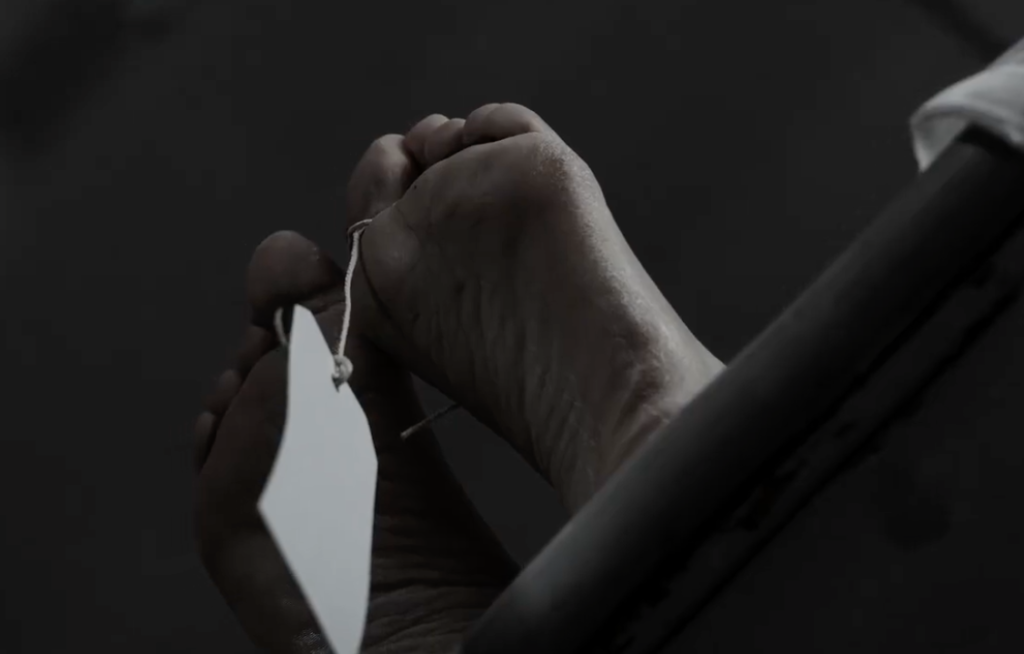
This sight pierced Takami’s heart. If I hadn’t been a little lucky, would it be me lying there? At that moment, the desire to provide a place of dignity for nameless Japanese people began to take shape.
In May 1907, to give form to this wish, the Japanese Mutual Aid Society was established, with Takami as its founding president. The society’s activities expanded from mutual aid in healthcare and daily life to properly mourning and burying deceased Japanese residents.

Finally, in 1912, he realized his long-held dream of purchasing land for the Japanese Cemetery in New York.
It was more than just securing a burial ground. It was a place to engrave the message: “You truly lived here” for those who died nameless in a foreign land. For Takami, building the cemetery was an extension of his mission as a doctor and an act of staying true to Campbell’s teaching: “Every human being has an equal right to live.”
Gratitude and Farewell
Once he was established and independent, Takami sought a way to express his gratitude to Nancy Campbell for her years of selfless support—not in words, but in a tangible form. She was the one who took in a boy who had practically run away from home, provided for his education and living expenses, and watched over him like a true son.
As Campbell grew older and began to lose her strength, Takami prepared a gift. One summer day, he invited her into a room where a cloth hung on the wall. “What is that?” she asked curiously. “This is a portrait of the most noble person in the world,” Takami replied quietly.
When he removed the cloth, it revealed a portrait of Campbell in her younger days. It is said she was speechless for a long moment before quietly shedding tears. It was perhaps the moment she realized that the love she had given had held a profound meaning in this young man’s life. She told Takami:
「”My work is now entirely finished. I can go to the other world in peace at any time. May God’s blessing be upon my beloved son.”
Fifteen years after their first encounter, the boy had grown into a man she could be proud of. Nancy Campbell closed her eighty-year life in January 1907.

The Shining Star, Even Now
Even after Campbell’s passing, Toyohiko Takami’s journey continued unchanged. Until he retired from the front lines of medicine in 1935, he remained the “Doctor of Compassion.” It is said he never discriminated based on wealth or race, always listening to each patient’s voice.
Beyond medicine, he was a central figure in the Japanese community in New York, involved in the founding and management of numerous organizations to ensure that those living in a foreign land would not be isolated. In 1940, in recognition of his years of service bridging Japan and the United States, Takami was awarded the Order of the Sacred Treasure, Sixth Class, by the Japanese government.
On May 17, 1945, Toyohiko Takami passed away at the age of 70. His tombstone in the Japanese Cemetery in Queens bears the name: Toyohiko Campbell Takami (1875 – 1945)
The middle name “Campbell” was the surname of Nancy Campbell, whom he revered as his mentor and mother. Records show that Takami had been formally adopted into the Campbell family. Engraving her name on his tombstone was both an expression of gratitude and a quiet testament that their bond, though transcending blood, was that of a “true parent and child.”
Nancy Campbell once told him:
“Every human being has an equal right to live.”

Takami never forgot those words, leaving them behind in this city in the form of medical care, mutual aid, and a cemetery. The shining star continues to cast its quiet light upon everyone, just as it always has.
