
Before Noritake became a world-famous porcelain brand, its foundations were laid by a young merchant in New York named Toyo Morimura.
Though he died in 1899—years before the Noritake company was formally established—his work with Morimura Brothers created the business network, capital, and vision that made Noritake possible.
This is the forgotten story of the man behind the earliest chapter of the Morimura–Noritake legacy.
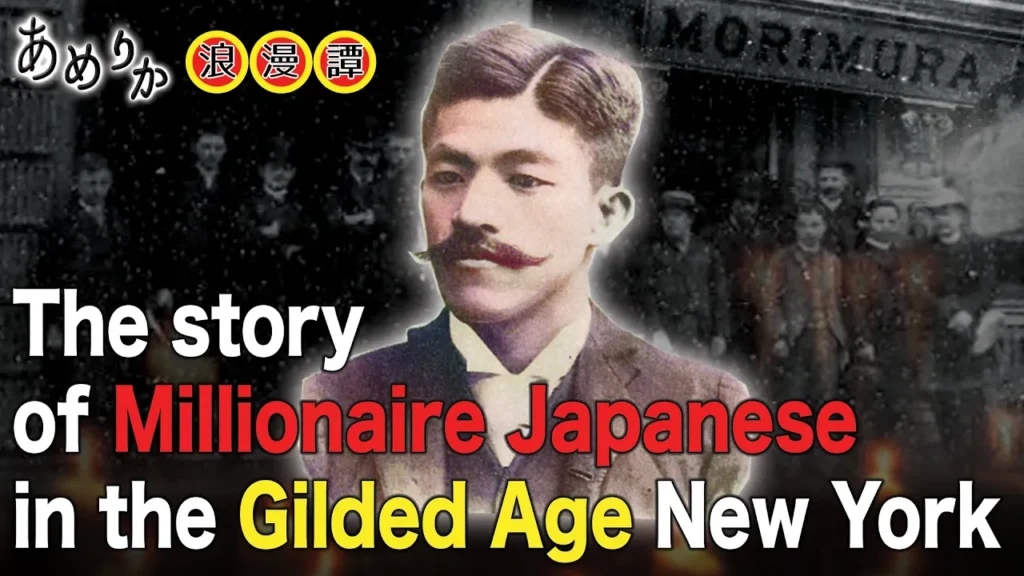
In August 1899, an obituary of a Japanese person appeared in newspapers across the United States.
Toyo Morimura died at the age of 45.
He was the representative of “Morimura Brothers”, a Japanese miscellaneous goods import company.
Read the New York Times article at the time.
Mr. Morimura’s life was spelled out carefully, and at the end of the sentence was the word “many times a millionaire”.
Morimura, whose name recognition in Japan was surprisingly low, was undeniably recognized as a “successful man” in New York’s business community, where “water sleeps, the enemy never rests”.
In the turbulent early Meiji era, he crossed the sea at the young age of early 20s,
Toyo Morimura expanded his business through constant efforts and management sense.
He also suffered alone in the unfamiliar life abroad.
Still, there was a certain future ahead of the line of sight.
Toyo Morimura, a pioneer in Japan-US trade.
What did he want to convey throughout his life?
Early life in Japan – strong determination to go abroad
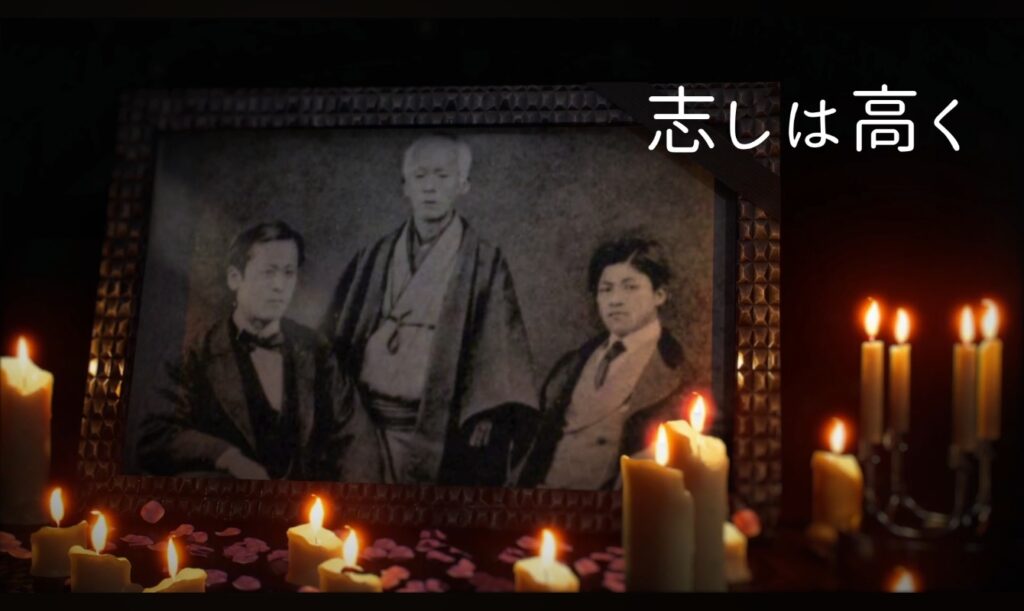
In 1854, Toyo Morimura was born in the family of Edo merchant Ichizaemon Morimura V.
The year after Commodore Perry came to Japan with the Kurofune, Western battleShips.
A dark cloud was hanging over the world of peace that lasted for about 260 years.
Toyo had a brother, Ichitaro, who was 15 years older than him.
Ichizaemon Morimura VI, who later became the founder of the Morimura conglomerate and became one of Japan’s leading businessmen,
At that time, he was just a mere Edo merchant.
Ichitaro said when his brother Toyo turned eleven.
“For the sake of the country, learn English, do business in a foreign country, and get our money back.”
In 1865, the Edo Shogunate yielded to the pressure of foreign countries,
An unequal treaty was signed with the opening of the country.
As for trade, it was carried out by foreign merchants residing in Yokohama.
Through the settlement trade, Kyoryuuchi Boeki,
Japan’s gold and silver was gone abroad more and more.
If things go as it is, Japan’s wealth will disappear and it will be eaten by foreign countries.
Ichitaro thought of protecting Japan.
It was exporting Japanese products directly to the local area, without the hands of foreign merchants, which was so-called “direct trade”, jika boeki.
In order to do so, he needed a partner who would be his hands and feet, and who would set up a store in a foreign country and do business there.
Then, the one Ichitaro singled out was his younger brother, Toyo, who was 15 years older than him.
Ichitaro wanted to earn foreign currency and make Japan a rich country.
Toyo showed determination to this wish of Ichitaro,
“If you would do anything for the country, I would do anything.”
Toyo replied.
Just “for the sake of the country”, the brothers’ thoughts became one.
A boy was only 11 years old at the time
Who could have imagined that he would later become a pioneer in Japan-US trade?
If Toyo decided to do so, the first thing he should do was improve your English skills,
and to learn about the circumstances of foreign countries
At that time, Yukichi Fukuzawa was well versed in foreign affairs.
Ichitaro tells Fukuzawa, “Please train my brother to become a merchant.”
Fukuzawa agreed, “That’s fine. Trade is the only way to make the country rich in the future.”
Toyo will study at Keio Gijuku, later the Keio University, a private school in Fukuzawa.
The year was 1871, four years after the beginning of the Meiji era.
After graduating, Toyo was looking for a way to do business abroad in order to fulfill a promise he made to his older brother.
At that time, an unexpected story came in.
Momotaro Sato, a businessman who had already started his business in America, was looking for a partner to start a business together.
Ichitaro was determined to send Toyo to America, using little money.
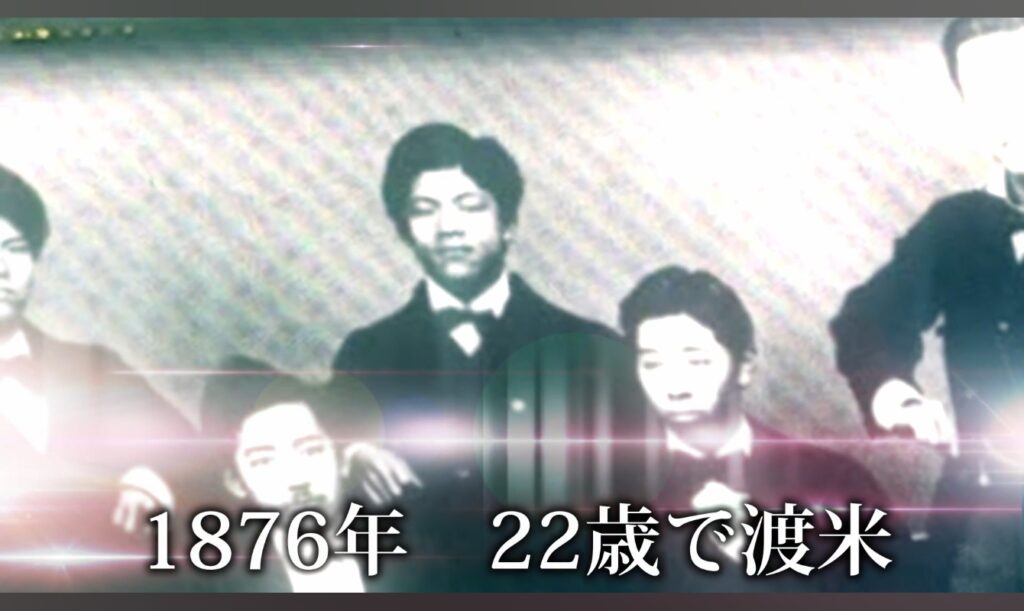
At this time, Sato and Toyo were on the Oceanic, a passenger liner.
There were six young men who went to New York onboard.
These six were later called the “Oceanic Group” and were said to be the first Japanese to travel to New York for trade with the United States.
“To get back Japan’s money”… Toyo has crossed the ocean to fulfill his vow with his brother.
He was only 22 years old in 1876.
The First Foreign Country
In 1876, the American economy was booming after the Civil War.
Businessmen such as steel tycoon Andrew Carnegie, financial tycoon JP Morgan, and oil tycoon John Rockefeller were all flourishing.
It was later called the “Gilded Age”, and it was an era of great growth for America.
Toyo, who came to this place with great aspirations, had what kind of life at that time?
In an unfamiliar foreign life, he strived to be frugal and thrifty.
He had bread and coffee for breakfast and cheap unsold meat for dinner.
Also, he only ate half of the apple and left the rest for the next day.
There was also unwarranted discrimination.
At that time, a large number of immigrants from China were flowing into New York.
When he was walking down the street, somebody fooled him by shouting “China Man”.
He was even thrown stones at by strangers.
When he was suffering from abdominal pain and asked the doctor, he was turned away.
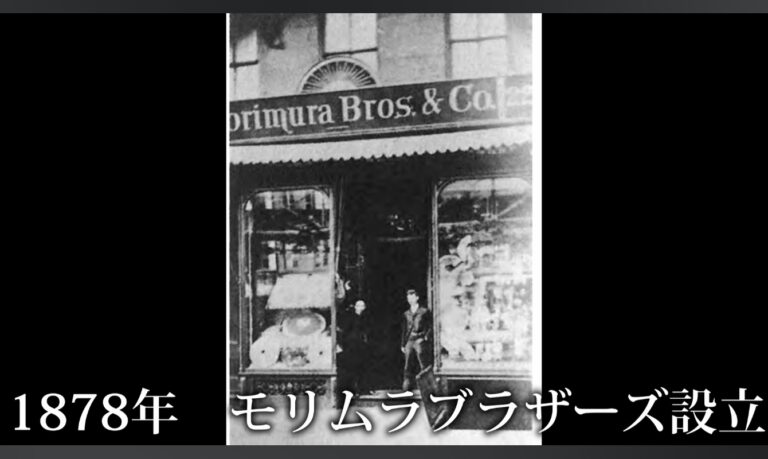
Without giving in to such discrimination, Toyo ran a retail store that sold Japanese miscellaneous goods.
He started Hinode Shokai jointly with Sato and others.
The capital was 1,500 dollars each, equivalent to 6 million yen in today’s money.
His older brother Ichitaro bought Japanese antiques, lacquerware, uchiwa fans, and other products and sent them to Toyo in New York.
And he displayed them in the store.
There a tailwind blew for Toyo, who had never done business in Japan.
At the World’s Fair held in Philadelphia that year, the exhibition of Japanese products was well received,
Hinode Shokai’s products sold like hot cakes.
The price of flowers that Ichitaro purchased for 3 yen in Japan was sold for an amount equivalent to about 30 yen.
It’s 10 times the purchase price. Toyo was able to make a big profit.
Fortunately, Toyo’s sailing began.
The Conversion to wholesale
Two years later, Toyo opened his own retail shop independently from Sato.
Large department stores, Macy’s, and many other shops gather there.
It was the number one shopping area in New York at the time.
This was the beginning of “Morimura Brothers”,
Toyo would move forward step by step in the business community of New York.
The reason the business was on track was because of Toyo’s personality.
He cleaned the front of the store every morning, removing dust from the products one by one.
At night, after tidying up, he organized the slips and went home later than anyone else.
He never neglected to research American’s preferences.
He suggested to a customer who looked curiously at the tokkuri to use it as a vase for a single flower.
While observing the lifestyle habits of Americans, he asked himself what Morimura’s products would be useful for.
He was always thinking something like that.
There is an episode that gives a glimpse of Toyo’s sincerity in his business.
An American employee mistakenly sold a set of $5 items for $5 each. That was double the price.
The customer didn’t notice it and went home satisfied.
Toyo found this out while sorting out the slips.
He told the employee to rewrite the slip.
However, the clerk said, “The customer agreed to buy it for $5, so why don’t you leave it as is?”
Toyo responded, “There is a certain standard for the profits of merchants. It is unacceptable to sell two and a half dollars a piece for five dollars.”
Hearing this, the employee was moved, saying, “How can there be such an honest, god-like person today? If I work with this person, I will become a true human being.”
It had been 5 years since he started doing business in New York.
From the outside, the Morimura Brothers’ business seemed to be doing well, but Toyo saw many companies and stores fail in business and leave over that 5 years.
5 to 10 years from now, what should they do to survive?
Unbeknownst to others, Toyo had such distress.
At that time, Yasukata Murai, Toyo’s right-hand man, proposed conversion from retail store to wholesale business.
While there was a risk of holding inventory by purchasing a large amount of products,
If he gets a large contract, he can earn a large and stable income.
The opinions of Murai and Toyo, who were particular about the retail business, followed parallel lines,
He decided to leave that decision to his older brother Ichitaro in Japan.
Ichitaro agreed with Murai’s opinion on the wholesale business.
In light of Morimura Brothers’ philosophy of “earning foreign currency and enriching Japan,”
They decided to switch to a more profitable wholesale business.
If his brother was like that, then there was no doubt.
without complaining that his opinion was overruled,
Toyo jumped into action immediately.
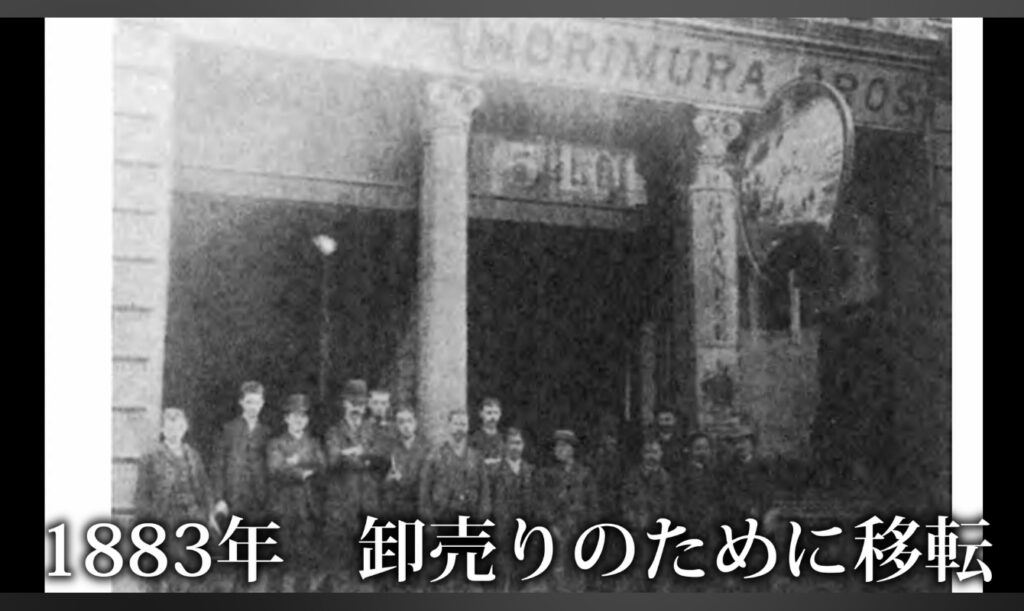
In 1883, Morimura Brothers moved its store to the current Soho area.
It was a global wholesale area, where New York and American retailers as well as people purchasing the latest trends from all over the world gathered.
Time to prosperity – The Tragedy Before Noritake
Morimura Brothers treated our products with care on a daily basis,
It was extremely rare that the product was damaged or broken,
Their products, which were highly evaluated in the industry, quickly became popular.
Toyo hired an American salesman also.
It was also around this time that catalog sales began throughout the United States.
Toyo was worried about his conversion to wholesale business,
However, it turned out to be an unfounded concern, and large contracts started to come in one after another, and its income became even more stable.
The switch to a wholesale business was a major stepping stone to a great success later on.
Next, Toyo came up with the idea of developing an original product.
Japanese antiques, folding fans, and uchiwa fans will lose their popularity once the boom in Japan ends.
Things that are in constant demand are things that we use in our daily lives.
Toyo, who carefully observes the lifestyles of Americans, was interested in tableware.
In the United States at that time, most were imported from Europe,
While they were popular, they were often expensive.
He started by asking a Japanese potter, Kamamoto, to make a coffee cup.
Although Japanese craftsmen do not know how to attach handles to vessels,
Once they managed to build it, the high-quality, low-cost coffee cup sold like hot cakes.
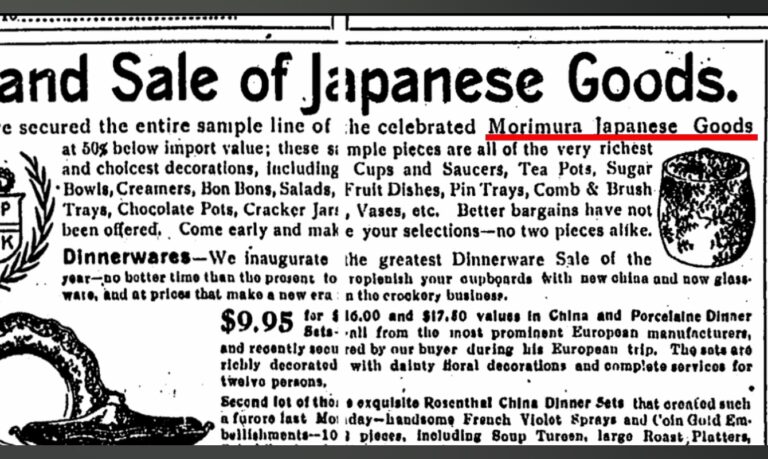
Next was the development of tableware with a stylish Western design called fancy china, which the common people longed for.
Toyo set up a department specializing in design within the company and devoted himself to this business.
He planned a design and sent it to a Japanese potter for their opinion.
Craftsmen who had no knowledge of Western-style design were reluctant.
In the current situation where progress was slow, Toyo threw words of encouragement,
“If other people can do it, why can’t we?”
Such efforts paid off, and it took about five years to complete tableware with a Western-style design.
The tableware of Morimura Brothers lined up in department stores and shops all over the United States
It quickly captivated the American people.
During this period, the amount of exports from his brother in Japan to Morimura Brothers was about 280,000 yen a year.
That means Japanese goods worth 100 billion yen equivalent to today’s term were shipped across the sea.
A business that started with just $1,500 reached a property value of nearly $100,000 by the end of the 1890s.
Toyo and his older brother Ichitaro’s desire to “earn foreign currency for the nation” blossomed.
The ultimate goal of Toyo’s original products was pure white tableware.
The story went back to 1887.
Toyo, who was visiting the Paris Expo with his brother, was fascinated by the pure white tableware.
Because the manufacturing method of Japanese ceramics was different from that of Western ones, he could only make grayish ones.
Pure white elegant tableware that seems to see through everything.
How much profit would he make if he sold this himself?
Hot clam chowder is poured into a bowl of soup.
A crispy brown turkey just taken out of the oven is on a family size platter.
Toyo overcame many difficulties so far. He’s sure he can do it.
He would have imagined how it would be used in American homes.
Toyo’s challenge would continue forever. but….
Just then, on July 31, 1899, Toyo Morimura passed away suddenly. He was 45 years old.
It was an untimely death at the point of expanding the business more and more.
American newspapers everywhere mourned the death of the great businessman.
The New York Times touched on his late personality,
“He was a generous businessman with a strong charity spirit. He was very popular with his employees.”
Keio University’s school bulletin published a portrait of Toyo at the beginning, and then touched upon his death.
“Compared to the merchants of the time who were reluctant to learn the ways of the developed countries, he has a different style.”
He praised Mr. Toyo’s pioneering spirit in the turbulent early Meiji period.
Yasukata Murai was Toyo’s right-hand man.
He inherited his will and greatly increased the achievements of the Morimura Brothers,
He became one of the elders of the New York Japanese community.
It is said that when he gave a public speech, he always praised Toyo’s personality and shed tears.
Also, his older brother Ichitaro, who succeeded the name Ichizaemon VI some years ago,
“The success of Morimura Brothers in the United States is entirely due to Toyo’s personality.
He is my younger brother, but I think of him as my older brother in spirit, character and business.”
He praised his beloved brother’s lonely struggle with the utmost respect.
There were not many words left by Mr. Toyo, who was honest and reticent in his business, however, Toyo once said to his brother something like this.
“I want to spend money for my country.”
Earning money is not for your own luxury. Money should be spent for everyone’s happiness.
His older brother inherited his younger brother’s will and found Morimura Toyoakikai, a charitable organization.
This helped women advance into society and became a forerunner of modern philanthropy.
It was when he was 11 years old, his older brother asked him to do business abroad for the sake of the country.
At the age of 22, he crossed the sea and experienced life in an unfamiliar foreign country.
Struggling and surviving difficulties with his business acumen, sometimes boldly, sometimes cautiously,
Toyo Morimura steadily expanded his business.
He left this world unwillingly,
His noble spirit must have been etched into the hearts of many.