
In the early Meiji period, a group of young Japanese entrepreneurs crossed the Pacific to the United States and helped lay the foundations of Japan–U.S. trade.
They later came to be known as the Oceanic Group, producing figures such as Rioichiro Arai and Toyo Morimura, whose names remain prominent in the history of bilateral trade.
Yet surprisingly little is known about how this group was formed, who its central figures were, or what paths its members followed afterward.
Drawing on primary sources such as photographs and diaries, this article examines the true nature of the Oceanic Group and the later lives of its members.

What Was the Oceanic Group?
The Oceanic Group was a collective of six young Japanese businessmen who traveled to the United States in 1876 (Meiji 9).
A group photograph of these men is preserved in the archives of Morimura Trading Company and has been widely circulated online.
The photograph captures several individuals who would later leave their mark on the history of Japan–U.S. trade.
Key Figures in the Photograph
Rioichiro Arai — A Pioneer of the Raw Silk Trade
Seated at the far left of the front row, legs crossed, is Rioichiro Arai.
Arai devoted himself to the raw silk trade, served as an executive of the American Silk Association, and came to be known as a founding figure of Japan’s raw silk trade. He earned respect within American business circles and stands out among Japanese entrepreneurs of the era for successfully pursuing his business ideals with unwavering conviction.
Toyo Morimura — A Young Talent Who Traveled to America at 22
Standing at the center of the back row is Toyo Morimura, who was just 22 years old at the time.
Although Morimura passed away at the age of 46, he achieved great success through direct trade in ceramics by closely studying American tastes. His vision was carried on by his successors, eventually leading to the establishment of the globally recognized Noritake brand. The Morimura name continues to represent trust and quality in the United States.
Momotaro Sato — Founder of the Oceanic Group

The Leader Who Guided Young Entrepreneurs
Seated at the center of the front row is Momotaro Sato, the de facto founder and leader of the Oceanic Group.
Sato organized the young men under the nominal status of “judicial trainees” and sent them to the United States, creating a framework for conducting business collectively.
Born into a Family of Rangaku Scholars
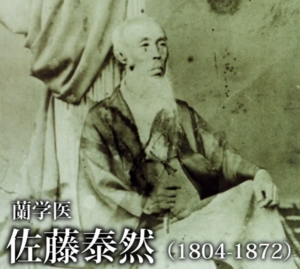
Momotaro Sato was born in 1853. His grandfather was Taizen Sato, a renowned scholar of Dutch studies (rangaku) in the Edo period.
Taizen served as a domain physician for the Sakura Domain, based in present-day Sakura and Togane in Chiba Prefecture, and is known as a foundational figure behind what later became Juntendo University.
A man of foresight, Taizen believed that deeper exposure to the outside world was essential and actively sent members of his family abroad.
“Shipmates” Recorded in Korekiyo Takahashi’s Diary

Taizen recognized that the global center of knowledge had shifted from Dutch to English. As a result, he enrolled his grandson Momotaro in the English school run by American missionary James Curtis Hepburn.
Among Sato’s classmates were prominent figures such as Takashi Masuda, who later supported the Mitsui conglomerate, and Tadasu Hayashi, Sato’s uncle and a future diplomat. It was also here that Sato met Korekiyo Takahashi, who would later become Prime Minister of Japan.
According to Takahashi’s autobiography, he traveled to the United States in 1867 alongside Tetsunosuke Tomita of the Sendai Domain. Takahashi notes that Sato was on the same ship. After being sold into slavery in America and later freed, Takahashi reportedly worked at Sato’s shop in San Francisco.
At the time, Sato was only 14 years old. While working in San Francisco, he began his path as a trader.
Beginning Activities in New York
Sato is said to have resided in New York from around 1870. Records show that he studied at the Polytechnic Institute of Brooklyn from 1870 to 1875.
According to Meiji Jibutsu Kigen (Origins of Meiji-Era Institutions), Sato conducted on-site investigations in New York in 1871. In 1875, he founded the Japanese American Commission Agency in New York, importing Japanese tea, ceramics, and lacquerware while exporting American machinery to Japan.
Sato also served as an interpreter for the Iwakura Mission during its U.S. visit in 1871. Impressed by his abilities, Iwakura Tomomi reportedly offered him a government position, which Sato declined. Around this time, he appears to have converted his status to that of a government-funded student.
Recruiting Trade Trainees and Launching a Full-Scale Business in America
In 1876, Sato returned to Japan to recruit members for a full-scale business venture in the United States.
Those who answered his call were:
- Rioichiro Arai (raw silk)
- Toyo Morimura (Japanese goods)
- Rinzo Masuda (Sayama tea)
- Toichiro Suzuki (pharmaceuticals)
- Chushichi Date (high-grade silk textiles)
With the exception of Date (whose birth year is unknown), all were around 20 years old.

In America, they opened a shop called Hinode Shoten (“Rising Sun Store”).
The 1876 Trow’s New York City Directory lists:
“Sato Momotaro, feygds. 97 Front, h 560 Lex. av.”
The occupation entry “feygds” likely stands for foreign goods.
The shop was modest in size—approximately 20 feet by 75 feet (about 6 × 22 meters)—but benefited from the post-Philadelphia Centennial Exposition economic boom and enjoyed early success.
From Success to Setback: A Turning Point for Momotaro Sato
Over time, however, Sato’s business began to falter.
His marriage to an American woman increased household expenses, and continued overspending worsened cash-flow problems. Eventually, Sato was forced to return to Japan with creditors, and his dream of returning to America never materialized.
Later Years and a Quiet Exit
After returning to Japan, Sato assisted Rioichiro Arai with his business in Yokohama but never again engaged in trade in the United States.
He died in 1910 at the age of 57. His name appears among the officers listed in the 1890 issue of the Juntendo Medical Journal.
The man who once led a group of ambitious young entrepreneurs quietly faded from the historical stage.

Conclusion: What the Oceanic Group Represents
The story of the Oceanic Group reflects not only success, but also failure and setback—an authentic account of Meiji-era Japanese overseas ambition.
Behind the achievements of figures like Rioichiro Arai and Toyo Morimura stood a pioneer named Momotaro Sato. Understanding his life adds depth and dimension to the history of Japan–U.S. trade.
Much about Sato’s later life remains unclear, and this article will be updated as new information emerges.