
The Age When Silk Moved the World — Japanese Raw Silk and the Challenge of Rioichiro Arai
When discussing modern Japanese history, raw silk cannot be ignored.
Many people know the name of the Tomioka Silk Mill today.
However, far fewer understand how Japanese silk spread across the world.
Yet behind that global expansion lies ingenuity, persistence, and forgotten human drama.
Silk as a National Project in Early Meiji Japan
In the early Meiji period, silk production became a national priority in Japan.
It was not merely an industry.
Rather, it was treated as a foundation for modernization.
When historical records are examined closely, the scale of effort is striking.
Sericulture, reeling, export logistics, trading companies, and foreign exchange were all interconnected.
As a result, silk production evolved into a comprehensive system of national knowledge.
The Challenge of Standardization
Industrial Demands from the United States
At the center of silk production stood the silkworm.
It fed on mulberry leaves, formed cocoons, and produced silk thread.
However, as the United States accelerated industrialization, problems emerged.
Production that depended on nature was seen as inefficient.
Therefore, American manufacturers demanded standardization.
They raised difficult questions.
“The thickness of silk differs depending on the worm,” they said.
“Nevertheless, we need uniform quality.”
Japan’s Response Through Innovation
These demands were unrealistic.
Even so, Japanese producers did not reject them.
Instead, they invested in research and experimentation.
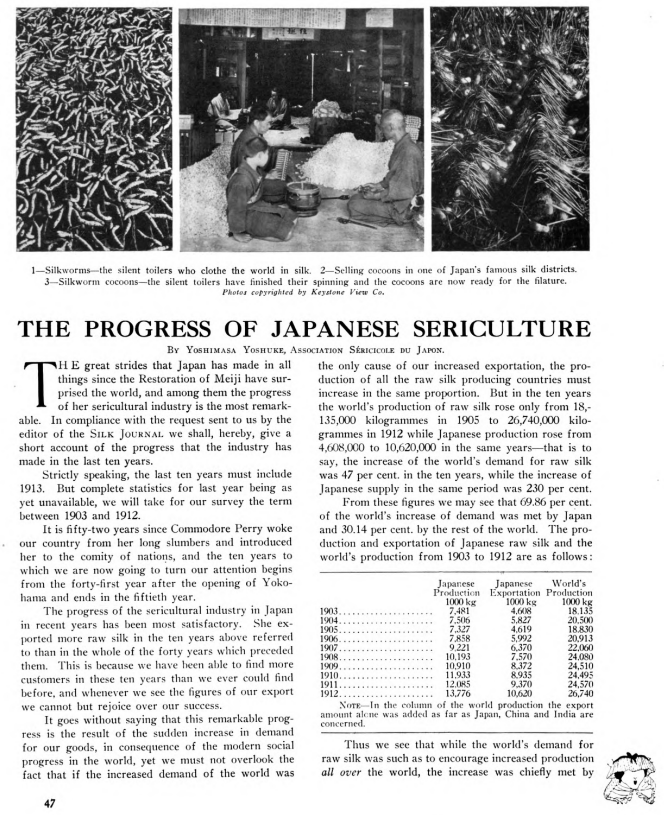
As a result, by around 1910, Japan became the largest raw silk producer in the world.
For a small island nation, this achievement was extraordinary.
At the time, it was widely regarded as nothing short of a miracle.
The Silk Association of America
America’s Long Relationship with Silk
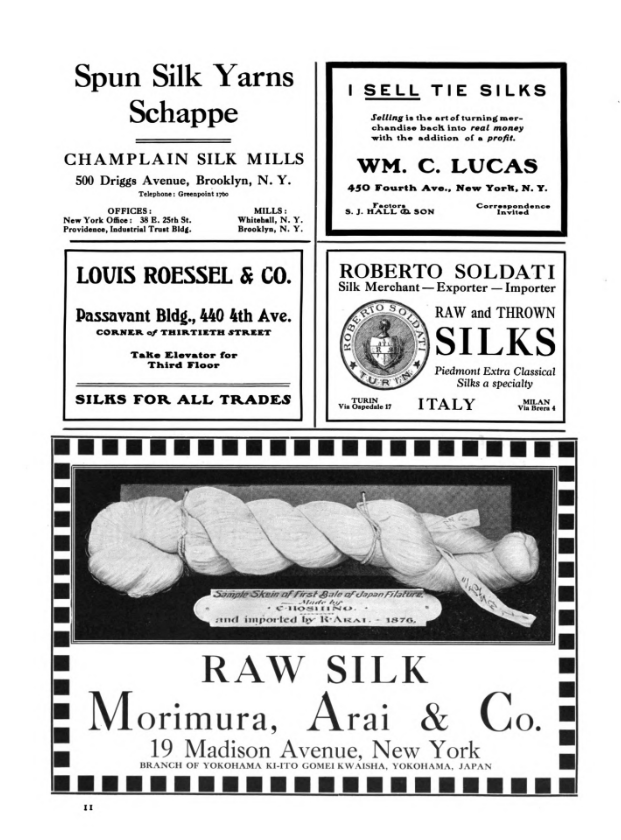
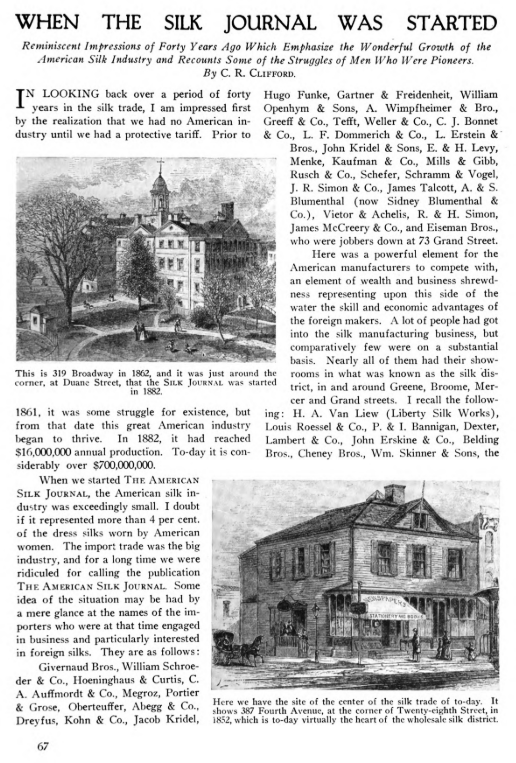
One of the most influential organizations in the industry was the Silk Association of America.
Its existence itself is revealing.
America’s interest in silk dates back to the post–Revolutionary War era.
At that time, leaders sought economic independence from Europe.
Therefore, silk attracted serious attention.
However, the American climate was poorly suited to sericulture.
Moreover, the cotton industry expanded rapidly using slave labor.
As a result, silk failed to take root as a domestic agricultural industry.
Mulberry Mania and Its Collapse
In the early nineteenth century, a boom known as “Mulberry Mania” spread nationwide.
From the 1820s, investment poured into silk production.
Connecticut, New Jersey, and Pennsylvania became key centers.
However, in the 1840s, silkworm diseases arrived from Europe.
Consequently, the industry suffered catastrophic losses and collapsed.
Industrialization and the Birth of the Association
After the Civil War, the United States entered rapid industrialization.
At this stage, silk was reconsidered.
Instead of producing raw silk domestically, America shifted strategy.
Raw silk would be imported.
Finished silk goods would be mass-produced.
Within this context, the Silk Association of America was founded in 1872.
Its goals were practical rather than symbolic.
It mediated trade with foreign silk producers.
It negotiated tariffs with the government.
Additionally, it supported research and distribution.
In the 1910s, the Silk Exchange Building was constructed near the New York Stock Exchange.
This location reflected the industry’s importance.
However, the situation later changed.
Synthetic fibers such as rayon spread rapidly.
Then, the Great Depression struck.
As a result, the Association gradually declined.
By the eve of World War II, its activities had effectively ended.
The Era of Rioichiro Arai — The Path Opened by Silk
Entering America’s “Silk Kingdom”
It was into this environment that Rioichiro Arai arrived.
His timing was critical.
Behind his success lay the explosive growth of Japan’s silk industry.
Moreover, the Silk Association of America had been founded just five years earlier.
Had Japan missed this opportunity, its textile industry might have remained domestic.
Instead, Japanese silk conquered global markets—if only briefly.
American Curiosity Toward Japanese Silk
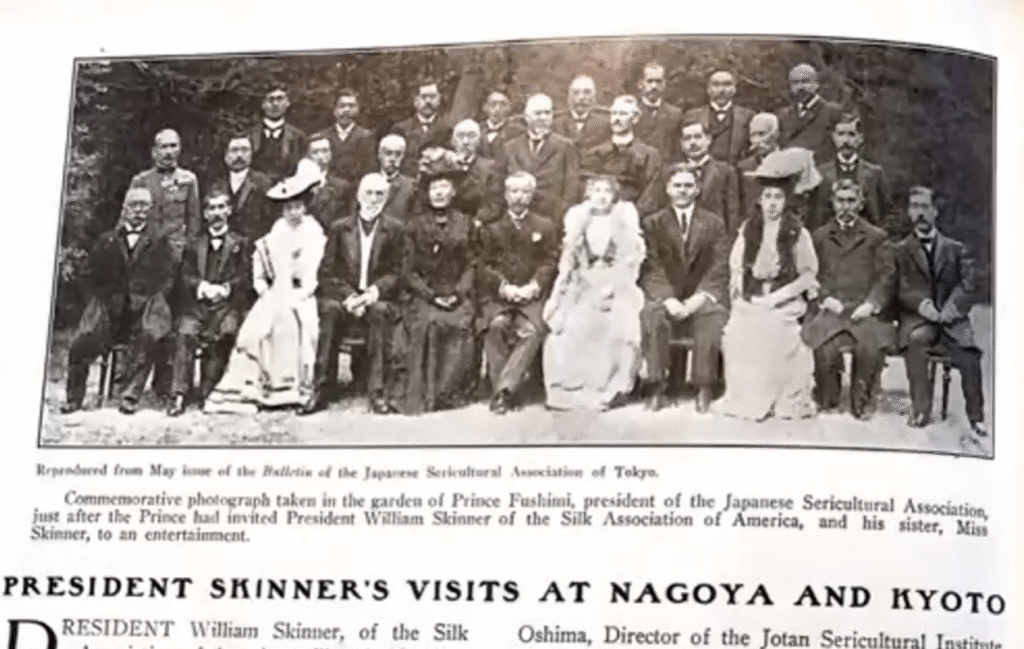
Around 1910, the Association’s president, William Skinner, visited Japan.
He traveled to Kyoto and sericulture regions.
He left behind photographs of imperial figures and farmers alike.
Americans asked a common question.
“How could such fine silk come from such a small country?”
Therefore, Japan became both a mystery and a subject of study.
Father and Son: Changing Perceptions
Interestingly, Skinner’s father once rejected Rioichiro Arai outright.
He declared that Japanese silk could not be trusted.
At that time, Arai had just arrived in America.
Some Japanese merchants engaged in dishonest practices.
For example, metal fragments were hidden in silk bundles to falsify weight.
However, by the son’s presidency, circumstances had changed.
Japanese silk had earned global respect.
The younger Skinner could joke with Arai about past misconduct.
This shift symbolized a generational transformation in trust.
Merchants, Morality, and Trust
In early Meiji Japan, merchants were still viewed with suspicion.
Ethical standards were inconsistent.
Therefore, trust in foreign trade was difficult to establish.
Japanese silk was often routed through London.
Buyers did not know who the sellers were.
As a result, transactions lacked transparency.
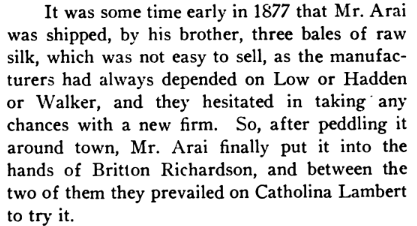
Rioichiro Arai challenged this system directly.
He emphasized honesty, quality, and accountability.
Over time, these principles reshaped Japan’s reputation.
Eventually, “Japanese silk is trustworthy” became an accepted belief.
In 1901, Arai became the first Asian board member of the Silk Association of America.
Later, in 1922, the Association’s 50th-anniversary publication documented his achievements.
Conclusion: Silk as a Global Language
Raw silk was once more than a textile.
It supported national economies.
It transmitted culture.
At times, it even functioned as diplomacy.
Figures like Rioichiro Arai used silk to communicate with the world.
In that sense, the stories told in America Roman-tan continue this forgotten silk road.